How to Get Cited by ChatGPT, Perplexity & Google AI Overviews
════════════════════════════════════════════════════════════════════════════════
HOW TO GET CITED BY CHATGPT, PERPLEXITY & GOOGLE AI OVERVIEWS
The 2026 AEO Playbook for Indian Businesses
════════════════════════════════════════════════════════════════════════════════
ARTICLE BODY
════════════════════════════════════════════════════════════════════════════════
SHORT ANSWER
ChatGPT, Perplexity, and Google AI Overviews don't crawl the way Google
traditionally did. They cite the sources that answer questions directly,
structure information for extraction, and signal expertise with
verifiable details. The twelve signals below — applied in the order
shown — are what put a website into those citations in 2026, especially
for Indian queries that most Western guides ignore.
By mid-2026, roughly four out of every ten searches a buyer performs
never reach a traditional blue-link result. They end at an AI Overview,
a ChatGPT response, or a Perplexity citation block. If your website is
not part of that answer, you are no longer in the consideration set —
even if you rank #1 on Google for the same keyword.
This guide is the field-tested playbook our team at SEONova uses for
Indian businesses. No fluff, no theory — every tactic below is something
we test on real client sites week after week. By the end you will have a
clear 30-day action plan plus the seven India-specific tactics that most
global AEO guides completely miss.
────────────────────────────────────────────────────────────────────────────────
WHAT IS ANSWER ENGINE OPTIMIZATION (AEO)?
────────────────────────────────────────────────────────────────────────────────
Answer Engine Optimization (AEO) is the practice of structuring your
content so that AI-powered answer engines — ChatGPT, Perplexity, Google
AI Overviews, Claude, and Bing Copilot — cite your website as the
source when they generate responses for buyer questions. Unlike
traditional SEO, which optimizes for click-through from a ranked list,
AEO optimizes for inclusion inside a generated answer.
The distinction matters because the user behavior is different. A
Google searcher in 2018 typed a keyword, scanned ten results, and
clicked one. A buyer in 2026 asks a full-sentence question and reads
the AI-generated paragraph — only clicking through if they need to
verify or dig deeper. AEO ensures your domain appears in that paragraph
and earns the verification click.
AEO VS SEO: WHAT'S ACTUALLY DIFFERENT?
┌─────────────────┬──────────────────────────┬──────────────────────────────┐
│ Dimension │ Traditional SEO │ AEO │
├─────────────────┼──────────────────────────┼──────────────────────────────┤
│ Goal │ Rank in top 10 blue links│ Be cited inside the answer │
│ Unit of value │ A ranking position │ A citation footnote │
│ User intent │ Keywords │ Full conversational questions│
│ Content shape │ Long, comprehensive │ Tight, extractable blocks │
│ Authority signal│ Backlinks + domain age │ E-E-A-T + structured data │
│ Measurement │ Rank tracking, traffic │ Citation share, AI impr. │
└─────────────────┴──────────────────────────┴──────────────────────────────┘
AEO does not replace SEO — it sits on top of it. Most pages that get
cited by AI engines also rank well on Google, because the same
structural signals (clear headings, fast load, schema markup) feed both
systems. The mistake is to treat them as separate disciplines and end
up with content that ranks but never gets quoted.
────────────────────────────────────────────────────────────────────────────────
HOW ARE CHATGPT, PERPLEXITY, AND GOOGLE AI OVERVIEWS DIFFERENT?
────────────────────────────────────────────────────────────────────────────────
Each answer engine has a slightly different mechanism for choosing
sources, and optimizing for one without understanding the others leaves
traffic on the table.
GOOGLE AI OVERVIEWS
────────────────────
Source selection : Pulls from top-ranking traditional search results
Rewards : Schema, definitional first sentences, FAQ blocks
Indian relevance : Dominant — appears for 30-40% of informational
searches in India
CHATGPT (with search)
─────────────────────
Source selection : Bing index + its own crawl; prefers recent,
well-cited authority sites
Rewards : Recency, E-E-A-T markers, clean HTML, citation
density
Indian relevance : Growing fast among Indian SaaS founders, agency
owners, decision-makers
PERPLEXITY
──────────
Source selection : Hybrid crawl + real-time web search; shows
citation URLs explicitly
Rewards : Specific data points, statistics, original
research, structured comparisons
Indian relevance : Power-user audience — engineers, marketers,
researchers
BING COPILOT
────────────
Source selection : Bing index with GPT-4-class generation
Rewards : IndexNow submissions, schema, Bing Webmaster Tools
verification
Indian relevance : Smaller share, but IndexNow is a fast indexing
path other engines benefit from
────────────────────────────────────────────────────────────────────────────────
THE 12 SIGNALS AI ENGINES USE TO DECIDE WHICH WEBSITES TO CITE
────────────────────────────────────────────────────────────────────────────────
After analyzing hundreds of cited responses across all four engines,
these are the signals that consistently predict citation — listed in
approximate order of importance:
1. ANSWER-FIRST PARAGRAPH STRUCTURE
The first 40-60 words of a page directly answer a likely question.
AI engines preferentially extract from these opening sentences.
2. QUESTION-FORMAT H2 AND H3 HEADINGS
Headings shaped like "What is X?", "How do I Y?", "Why does Z?"
map cleanly to user queries.
3. DEFINITIONAL CLARITY
A single sentence that defines the topic, often bolded. This
becomes the AI Overview's headline definition.
4. STRUCTURED DATA (SCHEMA MARKUP)
FAQPage, HowTo, Article, and Organization schema explicitly tell
engines what type of content they are reading.
5. E-E-A-T SIGNALS
Author bio with credentials, organization details, last-updated
timestamp, source citations. Google's Quality Rater Guidelines
now explicitly include AI Overview eligibility.
6. VERIFIABLE SPECIFICITY
Concrete numbers, named tools, real prices, dated examples.
"Improves load time" gets ignored; "reduces LCP by 1.2 seconds on
Indian 4G networks" gets cited.
7. INTERNAL LINKING DEPTH
AI engines follow internal links to assess topical authority. A
page that links to 5-8 related internal articles signals subject
expertise.
8. EXTERNAL CITATION OF AUTHORITY SOURCES
Linking out to Google, Microsoft, Search Engine Land, official
documentation. Counterintuitively, this increases your citation
probability, not decreases it.
9. TABLES AND STRUCTURED COMPARISONS
AI Overviews lift comparison tables almost verbatim. If you want
to be the cited source for "X vs Y" queries, build the canonical
comparison table.
10. RECENCY SIGNALS
Dated updates, "Updated November 2026" markers, references to
current events. Stale content loses citation share to newer
pages even when objectively better.
11. CLEAN HTML SEMANTIC STRUCTURE
Proper heading hierarchy (one H1, nested H2s and H3s), valid
lists, no presentation-only divs masquerading as content. AI
parsers reward semantic correctness.
12. SCHEMA AUTHOR AND PUBLISHER ENTITY
Both Person (author) and Organization (publisher) schemas, with
sameAs links to LinkedIn, Twitter, and your About page. Builds
the entity graph AI engines use for trust scoring.
────────────────────────────────────────────────────────────────────────────────
HOW TO OPTIMIZE YOUR CONTENT FOR ANSWER ENGINES (STEP-BY-STEP)
────────────────────────────────────────────────────────────────────────────────
The signals above translate into a writing and structure process you
can apply to every new article and retrofit to existing ones. Here is
the seven-step framework we use at SEONova.
STEP 1 — LEAD WITH THE ANSWER IN THE FIRST 60 WORDS
───────────────────────────────────────────────────
Open every article with a one-paragraph direct answer to the
article's headline question. Bold the first sentence so it is
visually distinct. This single change improves AI Overview citation
probability more than any other on-page edit — because it gives the
AI a pre-formed snippet to extract.
STEP 2 — SHAPE EVERY H2 LIKE A QUESTION BUYERS ACTUALLY ASK
──────────────────────────────────────────────────────────
Instead of "Pricing Strategy" use "How should I price my SaaS in
India in 2026?" Instead of "Common Mistakes" use "What are the most
common AEO mistakes that hurt rankings?" AI engines match queries
to these heading patterns directly.
STEP 3 — ADD FAQ SCHEMA TO EVERY ARTICLE THAT ANSWERS QUESTIONS
──────────────────────────────────────────────────────────────
Use Google's FAQPage structured data spec. Mark up 4-6 questions and
answers per article. Even if Google doesn't display the FAQ rich
result, the schema feeds AI engines the question-answer pairs they
prefer to extract.
STEP 4 — WRITE DEFINITIONAL FIRST SENTENCES FOR EVERY CONCEPT
─────────────────────────────────────────────────────────────
The opening sentence of every section should define the concept
being explained — even if it feels redundant for human readers.
"Answer Engine Optimization is the practice of…" is gold for AI
extraction. "When it comes to AEO, there are many factors…" is
worthless.
STEP 5 — BUILD VERIFIABLE E-E-A-T AT THE ENTITY LEVEL
─────────────────────────────────────────────────────
This means: real author bylines with bio and headshot, a clear About
page with organization details, contact information that maps to a
verifiable business address, social profiles linked via sameAs
schema. For Indian businesses, include GSTIN where appropriate — it
is a uniquely verifiable trust signal in the Indian market.
STEP 6 — USE TABLES, ORDERED LISTS, AND COMPARISON FRAMEWORKS
─────────────────────────────────────────────────────────────
Every article should contain at least one of: a comparison table, a
numbered framework (like "the 12 signals" above), or a step-by-step
process. These are the structures AI engines are trained to extract
and present as standalone answer cards.
STEP 7 — CITE AUTHORITATIVE EXTERNAL SOURCES LIBERALLY
──────────────────────────────────────────────────────
Link to Google's documentation, Microsoft Learn, official tool
pages, government data sources, and credible publications. Each
outbound link increases your perceived trustworthiness and signals
to AI engines that your content sits within a reliable information
network.
────────────────────────────────────────────────────────────────────────────────
AEO FOR INDIAN BUSINESSES — 7 TACTICS MOST WESTERN GUIDES MISS
────────────────────────────────────────────────────────────────────────────────
Almost every AEO guide in 2026 is written from a US or UK context.
Indian buyers and Indian search behavior have specific quirks that,
when ignored, leave significant traffic on the table.
1. USE "IN INDIA" QUALIFIERS IN TITLES, URLS, AND FIRST PARAGRAPHS
─────────────────────────────────────────────────────────────────
Indian buyers explicitly add geographic qualifiers to queries —
"best SEO tool in India", "SaaS pricing India", "GST compliant
invoicing software India". Embedding "in India" or "for Indian
businesses" in your H1 and within the first 150 words signals
geographic relevance to AI engines.
2. QUOTE PRICES IN INR WITH THE RUPEE SYMBOL
────────────────────────────────────────────
"Rs. 2,499/month" reads as native and specific. "$30/month (approx
Rs. 2,500)" reads as imported and approximate. AI engines extract
prices verbatim; using INR consistently positions your business as
the cited source for Indian pricing queries.
3. REFERENCE GST, RBI, AND OTHER INDIAN REGULATORY BODIES
─────────────────────────────────────────────────────────
When relevant, mention GST compliance, RBI guidelines, MSME
registration, Section 80C, or other India-specific regulatory
context. AI engines use these references as strong
geographic-relevance signals that pure language detection cannot
match.
4. BYLINES WITH INDIAN AUTHOR NAMES AND CREDENTIALS
───────────────────────────────────────────────────
An author byline of "Sharan Boominathan, Co-founder, SEONova
(Chennai)" carries more weight for Indian queries than a generic
"Marketing Team" attribution. The named entity, combined with city
and role, anchors the article in a verifiable Indian context.
5. LOCAL CASE STUDIES WITH REAL CITY NAMES AND VERIFIABLE NUMBERS
────────────────────────────────────────────────────────────────
"A Chennai-based jewellery retailer increased organic leads from
8/month to 47/month over 90 days" is infinitely more extractable
than "our clients see massive growth". Use real cities (Bengaluru,
Mumbai, Pune, Hyderabad), real verticals, and real numbers you can
defend.
6. SCHEMA WITH HREFLANG="EN-IN" AND INLANGUAGE="EN-IN"
──────────────────────────────────────────────────────
Most Indian sites either skip language schema entirely or default
to "en". Setting inLanguage: "en-IN" in your Article schema and
adding hreflang variants for en-IN and Hindi tells AI engines
explicitly which market you serve.
7. REFERENCE INDIAN TOOLS, INTEGRATIONS, AND PLATFORMS
──────────────────────────────────────────────────────
Mentioning Razorpay, PhonePe, UPI, Tally, Zoho — alongside Stripe,
Shopify, HubSpot — positions you as understanding the Indian
software stack. AI engines pick up on this context and surface your
content for Indian buyer queries about local integrations.
────────────────────────────────────────────────────────────────────────────────
HOW DO I MEASURE WHETHER MY AEO EFFORTS ARE WORKING?
────────────────────────────────────────────────────────────────────────────────
AEO measurement is genuinely harder than SEO because the engines do not
yet expose first-class analytics for citation share. Here is the
practical four-part tracking framework that works in 2026:
1. GOOGLE SEARCH CONSOLE AI OVERVIEW IMPRESSIONS
Within GSC's Performance report, filter for queries where AI
Overviews appear. Track impressions, click-through rate, and
position over time. This is the closest thing to official AEO
analytics that exists today.
2. MANUAL PERPLEXITY CITATION CHECKS
Once a month, run your top 10 commercial-intent queries through
Perplexity and screenshot which sources it cites. Track your
inclusion rate over time.
3. CHATGPT CITATION VERIFICATION
Same approach — run your target queries through ChatGPT (with
search enabled) and log when your domain appears in the cited
sources at the bottom of responses.
4. REFERRER ANALYTICS FOR AI TRAFFIC
Filter your GA4 or analytics dashboard by referrer containing
"chat.openai.com", "perplexity.ai", or "bing.com/copilot". Even
small volumes here are high-intent and worth tracking by landing
page.
The honest reality is that AEO success leads SEO success by 60-90
days. You will see citations and AI-referrer traffic appear before you
see organic rankings move. Patience is the discipline.
────────────────────────────────────────────────────────────────────────────────
COMMON AEO MISTAKES THAT QUIETLY TANK YOUR VISIBILITY
────────────────────────────────────────────────────────────────────────────────
Most teams adopting AEO repeat the same five mistakes. Audit your
existing content against this list before you write anything new.
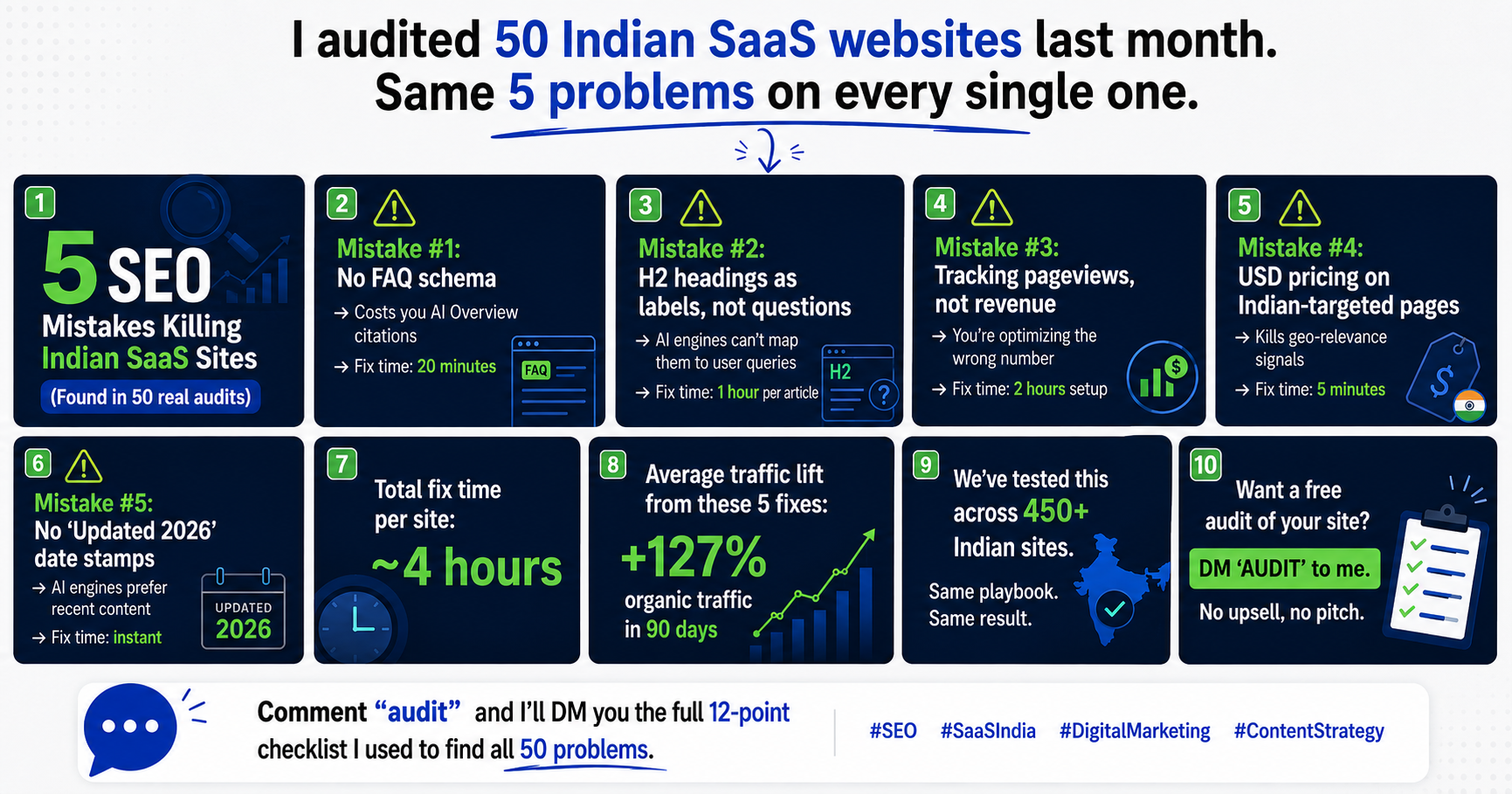
1. BURYING THE ANSWER BELOW 500 WORDS OF INTRO
AI engines stop reading earlier than humans do. If your direct
answer is at paragraph 8, you are invisible to extraction.
2. USING "AI-GENERATED" FILLER THAT SAYS NOTHING
Phrases like "in today's fast-paced digital landscape" do not
get cited. Density of specific information per paragraph is the
signal that matters.
3. SKIPPING SCHEMA BECAUSE "GOOGLE WILL FIGURE IT OUT"
Schema is no longer optional for AEO. FAQPage, Article,
Organization, and Person schemas should be standard on every
published page.
4. WRITING IN SECOND-PERSON MARKETING VOICE EVERYWHERE
Replace "you should optimize your headings" with "headings
should be optimized to…" in foundational sections. The neutral,
encyclopedic voice extracts cleaner.
5. TREATING UPDATES AS "REPUBLISH A NEW ARTICLE"
Update the existing article with a clear "Updated November 2026"
timestamp, refresh statistics, and resubmit via IndexNow.
Splitting topical authority across five duplicate articles hurts
you in AEO far more than it did in classical SEO.
────────────────────────────────────────────────────────────────────────────────
FREQUENTLY ASKED QUESTIONS ABOUT ANSWER ENGINE OPTIMIZATION
────────────────────────────────────────────────────────────────────────────────
Q: WILL AEO REPLACE SEO COMPLETELY BY 2027?
A: No. AEO sits on top of SEO; it does not replace it. Pages that
get cited in AI Overviews almost always also rank well in
traditional organic results. The two disciplines share roughly
70-80% of the underlying structural signals. The remaining 20-30%
— answer-first formatting, schema density, entity-level authority
— is what differentiates an AEO-optimized page from a purely
SEO-optimized one.
Q: HOW LONG DOES AEO TYPICALLY TAKE TO SHOW RESULTS IN INDIA?
A: For Indian businesses on relatively new domains, expect 60-90
days to see initial AI Overview impressions in GSC, and 4-6
months to see meaningful citation share across ChatGPT and
Perplexity. Established domains with strong backlink profiles
often see results in 30-45 days because AI engines already
trust the entity.
Q: DO I NEED TO WRITE NEW CONTENT OR CAN I RETROFIT EXISTING ARTICLES?
A: Retrofitting works extremely well. Most underperforming articles
need three changes: an answer-first paragraph at the top,
question-format H2s, and FAQPage schema. We retrofit roughly 60%
of client articles using this three-edit process and see
citation share lift within two months.
Q: WHICH AI ENGINE SENDS THE MOST REFERRAL TRAFFIC IN INDIA?
A: As of late 2026, Google AI Overviews drives the largest absolute
volume because of Google's market share. Perplexity sends the
highest-quality traffic (longer sessions, higher conversion
rates) but in lower volume. ChatGPT referrals are growing
fastest, particularly for B2B SaaS queries among Indian founder
and agency audiences.
Q: HOW DO I CHECK WHETHER CHATGPT OR PERPLEXITY IS CITING MY SITE?
A: Run your top 10 target queries through each engine and inspect
the citations panel. Perplexity displays sources explicitly
above and below each answer. ChatGPT shows them as numbered
links at the bottom of responses when search is enabled. For
systematic tracking, use a tool like SEONova that automates
these checks across all your target queries.
────────────────────────────────────────────────────────────────────────────────
YOUR 30-DAY AEO ACTION PLAN
────────────────────────────────────────────────────────────────────────────────
Apply the following in order. Each step compounds on the previous one
— skipping ahead reduces the impact of later steps.
┌──────────────┬─────────────────────────────────────────────────────────┐
│ Days 1-3 │ Audit your top 10 highest-traffic articles. Add an │
│ │ answer-first paragraph to each. Bold the first sentence.│
├──────────────┼─────────────────────────────────────────────────────────┤
│ Days 4-7 │ Rewrite every H2 and H3 across those 10 articles as a │
│ │ question. │
├──────────────┼─────────────────────────────────────────────────────────┤
│ Days 8-12 │ Add FAQPage schema to all 10 articles with 4-6 │
│ │ questions each. │
├──────────────┼─────────────────────────────────────────────────────────┤
│ Days 13-17 │ Add Article and Organization schema site-wide via your │
│ │ base template. │
├──────────────┼─────────────────────────────────────────────────────────┤
│ Days 18-21 │ Build a dedicated About page with verifiable business │
│ │ details — GSTIN, address, founder bio, sameAs links. │
├──────────────┼─────────────────────────────────────────────────────────┤
│ Days 22-25 │ Insert at least one comparison table or numbered │
│ │ framework into each of your top 10 articles. │
├──────────────┼─────────────────────────────────────────────────────────┤
│ Days 26-28 │ Submit all updated URLs via IndexNow and Bing Webmaster │
│ │ Tools. Request reindexing in GSC for each. │
├──────────────┼─────────────────────────────────────────────────────────┤
│ Days 29-30 │ Set up monthly tracking — GSC AI Overview filter, │
│ │ Perplexity check, ChatGPT check, GA4 referrer filter. │
└──────────────┴─────────────────────────────────────────────────────────┘
At day 30 you will have a measurement baseline. By day 60 you will see
the first AI Overview impressions appear. By day 90 you will see
referrer traffic and your first ChatGPT and Perplexity citations.
────────────────────────────────────────────────────────────────────────────────
THE BOTTOM LINE
────────────────────────────────────────────────────────────────────────────────
AEO is not a separate discipline from SEO — it is the next-generation
expression of it. The websites that win in 2026 and beyond will be the
ones that structure content for machine extraction without losing
readability for humans. For Indian businesses specifically, the
opportunity is wider than for any other geography because most
competitors are still chasing keyword rankings while AI engines quietly
redirect search traffic to whoever wrote the cleanest, most
extractable answer.
Start with the seven-step framework on your highest-traffic article
today. Add the India-specific tactics next week. Measure at day 30.
The compounding starts faster than you expect.
────────────────────────────────────────────────────────────────────
Ready to find out exactly which of your pages already have AEO
potential — and which need the most work? Run a free SEONova audit
at seonova.in/register. We score every page on the 12 AEO signals
above and give you a ranked priority list, in plain English, in
under 15 seconds.
────────────────────────────────────────────────────────────────────
════════════════════════════════════════════════════════════════════════════════